
Welcome to the intimacy choreography workshop series at Theater Quo Vadis!
Ma 9.11. klo 13:00-16:00
Sara-Maria Heinonen: Toolbox day – Performers Practice and Toolbox for Intimacy
Ma 16.11. klo 13:00-16:00
Kaisa Kukkonen: Intimacy Choreography in Dance and Performance Art
Ma 23.11. klo 13:00-16:00
Emma Castrén: Intimate Scenes in Theatre – Text as a Starting Point for Intimacy
Venue: Teatteri Quo Vadis, Haukilahdenkatu 2 d, Helsinki
How to register
Register here by Friday 30 October.
Questions and cancellations:
The sessions are free of charge for participants. The number of participants is limited to 14 people per session. If you register but are no longer able to attend, please cancel your registration so that someone on the waiting list can take your place.
The sessions will be held in Finnish or English, depending on the participants’ needs.
Please include a short motivation letter with your registration. It won’t affect whether you get a spot, since places are filled on a first-come, first-served basis, but we’ll prioritise people who can make it to all the sessions.
Accessibility information: Unfortunately, the venue is not fully accessible. There are two sets of stairs at the entrance, one of which is steep. The venue has an accessible toilet.
Intimacy choreography is a relatively new role in theatre, performing arts and audiovisual productions. As a profession, it emerged in the United States in the wake of the #metoo movement and the COVID-19 pandemic, and intimacy professionals now work on film and TV productions as well as in most new performing arts work.
At Quo Vadis, each workshop session is led by a different professional, each with their own perspective on intimacy choreography. The series focuses on performer work with Sara-Maria Heinonen, intimacy choreography for dance and improvisation with Kaisa Kukkonen, and dialogue and text with Emma Castrén. We explore the tools of intimacy choreography from different angles. The workshops are open to all performing arts professionals: actors, performers, dancers, directors, choreographers, dramaturgs and writers.
In the workshops, participants discuss, move in relation to one another, practise consent, and get to know the tools used in choreographing intimate scenes.
What practical tools does intimacy choreography offer?
How can intimacy choreography support dance and performing arts processes?
What questions should a group address when working with intimacy, sexuality, touch or other sensitive topics?
There is no kissing and no simulated sex; instead we use placeholder gestures. At the heart of intimacy choreography is the question of how we can draw inspiration from intimacy, and tell different stories about it, in creative ways. We encourage you to recognise your own boundaries and to adapt the exercises to suit you. There are many ways to take part in the exercises.
This is not a training in intimacy choreography, and it does not qualify participants to work as intimacy choreographers.
picture by https://imagesbybambu.com from the performance Paincare by Raphaël Beau and Noia “sky” Kekoni-Kattelus.
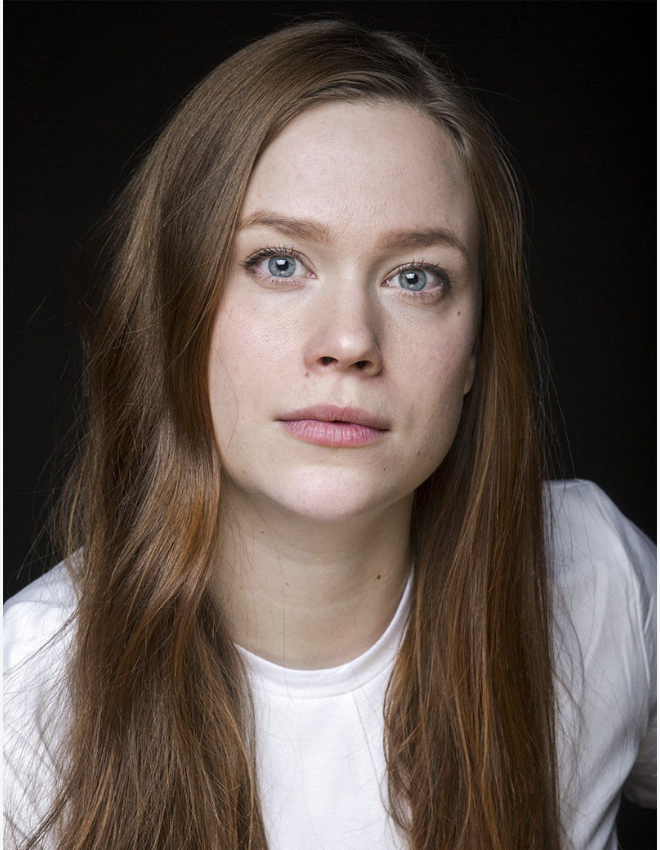


Sara-Maria Heinonen is a pioneer of intimacy coordination in Finland. She is an actor (Näty 2019), a sexuality counselor (Sexpo 2019) and a certified intimacy choreographer (IPA 2024). Heinonen has worked as an intimacy choreographer since 2020, making her one of the first practitioners in the Nordic countries. She has worked on film, TV, opera, theatre and dance productions. She is particularly interested in creating a free and curious working experience through good working practices. Drawing on her background as an actor, she is curious about the experience of the performing body, and she explores how the practices of intimacy choreography can remove tension and obstacles from the performer’s creative process.
Emma Castrén is an actor, mime artist, and certified intimacy coordinator. She trained at the École Internationale de Théâtre Jacques Lecoq in Paris (graduated 2016), earned a Master of Theatrical Arts from the Theatre Academy of the University of the Arts Helsinki (2020), and received her certification from the Intimacy Professionals Association in 2025. She has worked as an intimacy coordinator on theatre productions, TV series, and films. Mentored by Heinonen, Castrén entered the field as one of Finland’s first intimacy coordinators; she is particularly interested in the semantic pitfalls of communication and in unlocking creativity within a working group. Her work emphasizes precision and distinctiveness in physical expression, the creation of powerful impressions, and processes that are playful, safe, and responsible—environments where creativity can flourish.
Kaisa Kukkonen is the first intimacy choreographer in Finland certified specifically for the performing arts. Her background spans from performance art (MFA, 2022), dance pedagogy (MA, 2021), to dance (Outokumpu, 2010). She completed her intimacy choreographer certification in 2025 and has since carried out her first projects during the autumn of 2025 and spring of 2026. Her mission is to make consent culture an integral and self-evident part of the Finnish performing arts field. Questions of consent, touch, and ensemble work have been present throughout her career. She has practiced contact improvisation since 2005 and has worked as a contact improvisation teacher, organiser, and performer in works involving touch and intimacy since 2010.
The workshop is part of Quo Vadis and the QV UG project’s initiative of Radical Hospitality. As part of the QVUG project, Quo Vadis is organising workshops for performing arts professionals in autumn 2026. We offer participants free, facilitated workshops and sessions that provide opportunities to come together, learn new things, share their own practices, and connect with new colleagues. We practise hospitality by offering different ways to share and strengthen professional skills. In return, we hope participants will engage with the course programmes and contribute to a vibrant exchange of artistic learning. We wish to bring more variety to the everyday working lives of freelancers, while fostering reciprocity and creating spaces for multidirectional learning.